 Dr. Deepika Bahri
When Thin Becomes Dangerous: The Ethics Crisis in Fashion Advertising
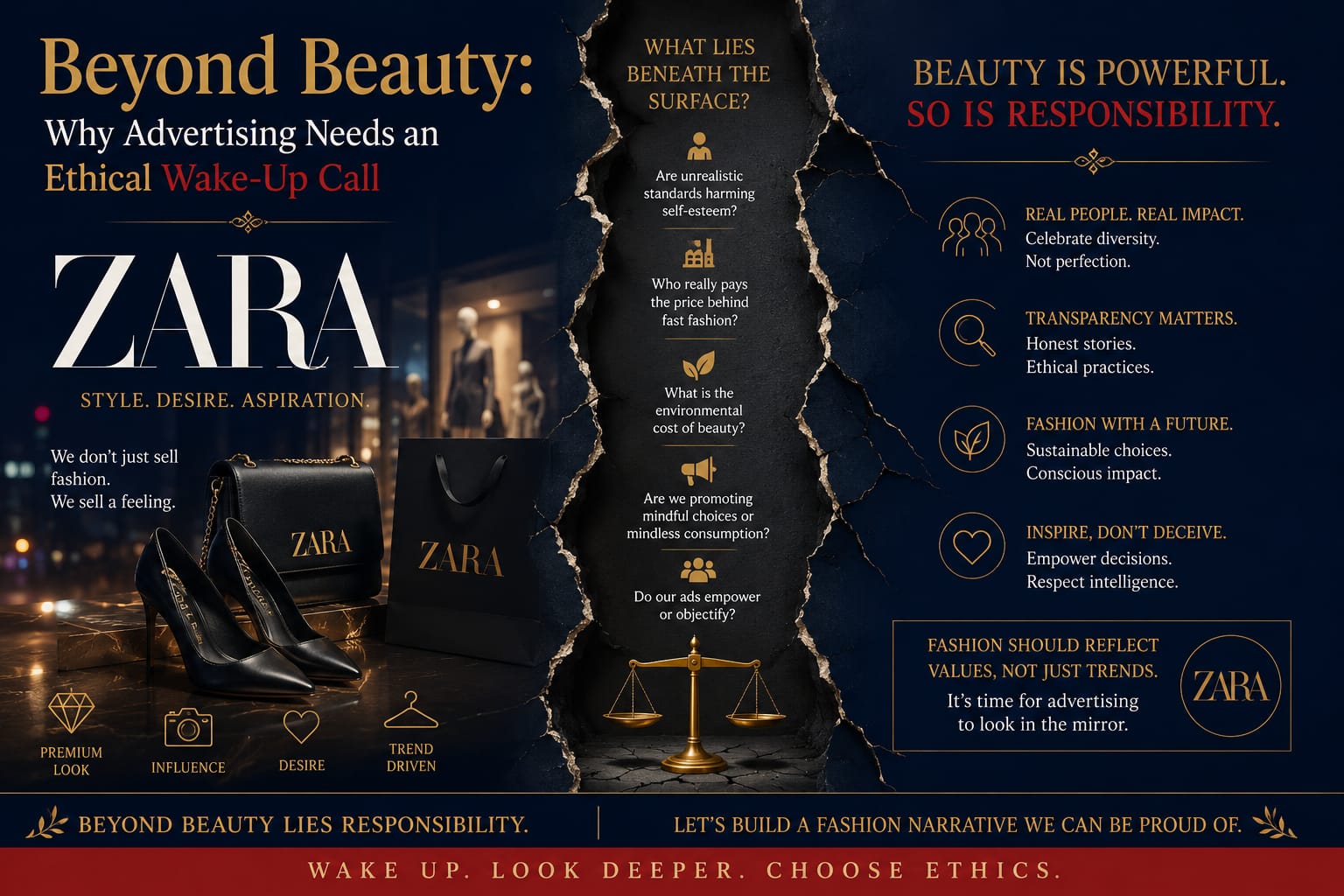
This week, global fashion giant Zara found itself under scrutiny as the UK Advertising Standards Authority banned two of its campaigns featuring models deemed “unhealthily thin.” While Zara complied swiftly, the episode raises a larger question: Has the advertising industry lost sight of its ethical responsibility?
For decades, advertising has been a powerful force, not just shaping consumer preferences, but also influencing body image, cultural norms, and even self-worth. From photoshopped skin to unrealistic body standards, the industry has often walked a thin line between aspiration and harm.
What happens when creativity crosses into manipulation?
What’s the cost of selling a dream that damages mental health?
In a bold move this week, the UK Advertising Standards Authority (ASA) has prohibited two Zara advertisements, ruling that the models featured appeared “unhealthily thin”—labeling the imagery irresponsible for its potential impact on body image norms El País+12The Times+12livemint.com+12.
One ad, showcasing a voluminous shirt priced at £39.99, drew criticism for illuminating protruding collarbones through styling and pose, while the other, promoting a £25.99 short dress, depicted gaunt facial features and disproportionately slender limbs—exaggerated by shadows and posture The Times+1.
Zara swiftly withdrew the flagged images—even those not formally banned—and defended its practices, noting that both models had medical certificates affirming their health, and that photo edits were limited to minor lighting and color adjustments.
Reflections on the Advertising Industry:
This development underscores an industry at a crossroads. Fashion advertising once glorified the ultra-thin “heroin chic” aesthetic—a trend that now feels regressive amid the broader push for inclusivity and health-conscious imagery.
The ASA’s move reflects growing accountability demands of brands, compelling them to balance artistic expression with responsible messaging. As body positivity and mental well-being gain prominence, the onus is on advertisers to champion diverse, realistic representations without glamorizing unhealthy extremes.
Is this a signal of change—or just a modulated pause in a cycle? Either way, the industry’s next steps will reveal whether this is a watershed moment or another fleeting trend.
💭 Ethics vs. Aesthetics
Advertising isn’t just about what you sell, it’s about how you sell it.
And increasingly, that “how” is under fire.
When brands use excessively retouched images or models with unhealthy body types, they don’t just sell clothes or cosmetics, they sell unrealistic expectations. The ripple effect? Eating disorders, anxiety and a deepening crisis in youth mental health.
And it’s not just fashion.
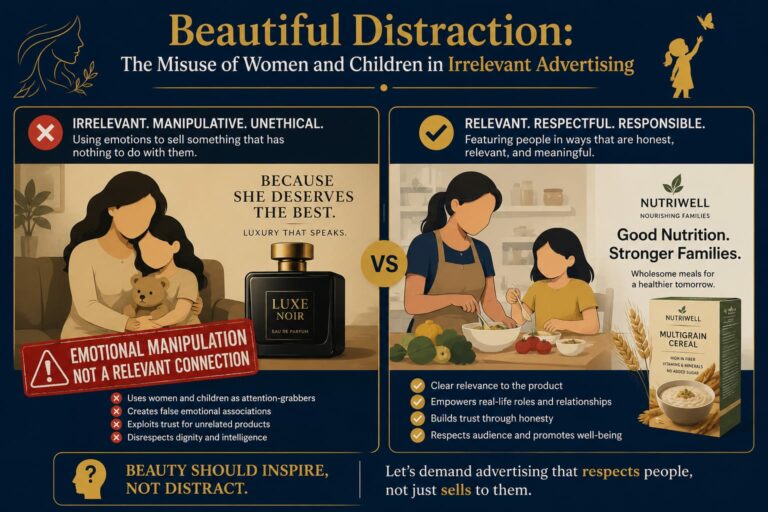
Food, real estate, fairness creams, lifestyle products — many sectors still promote exclusionary or deceptive ideals.
🧭 The New Mandate: Responsible Branding
Today’s consumers are more aware — and more vocal. They’re asking for brands that walk the talk: inclusive campaigns, real representation, honest claims.
Governments and watchdogs have begun responding. From France’s “retouched image” disclaimers to the UK’s ban on misleading beauty ads, the tide is turning.
But change must come from within. Advertising agencies, creative directors, and brand managers must shift from “What will sell?” to “What will serve?”
✅ What Ethical Advertising Looks Like:
-
Realistic, diverse body types
-
Clear disclaimers on photo manipulation
-
Inclusive narratives that represent various ages, ethnicities, genders
-
Honesty in claims, especially in health, beauty, and food sectors
-
Empathy-driven storytelling, not fear or insecurity tactics
🧠 Final Word:
Advertising is a mirror — but it doesn’t have to reflect only aspiration. It can reflect authenticity, empathy, and evolution.
As the Zara case reminds us, what we see in an ad isn’t just marketing — it’s messaging that matters. And that messaging must now be built on more than just creativity — it must be built on conscience.
Also Read: THE BISLERI EFFECT: BRANDING BEYOND THE BOTTLE

Written by
Dr. Deepika Bahri
Dr. Deepika Bahri is a passionate Branding and Digital Marketing expert with a Doctorate in Marketing, specializing in Brand Strategy and Digital Transformation. With over Two Decades of experience in the media, advertising, and communication industry, she brings a unique blend of academic insight and real-world business acumen. She has also been honored with an Honorary Doctorate for her contribution to Women Empowerment, recognizing her efforts in mentoring, uplifting, and creating platforms for women-led enterprises. Currently serving as the CEO of Antraajaal, a leading branding and advertising agency, Dr. Bahri is committed to sharing insights on branding, marketing strategy, women leadership, and digital growth through her writing and speaking engagements.
Need Expert Guidance?
Antraajaal builds purpose-led brand identities for serious businesses.
Brand strategy, identity and digital presence — one integrated system, built to lead across North India.
Our Services