 Dr. Deepika Bahri
A Branding Lesson in Heritage & Identity
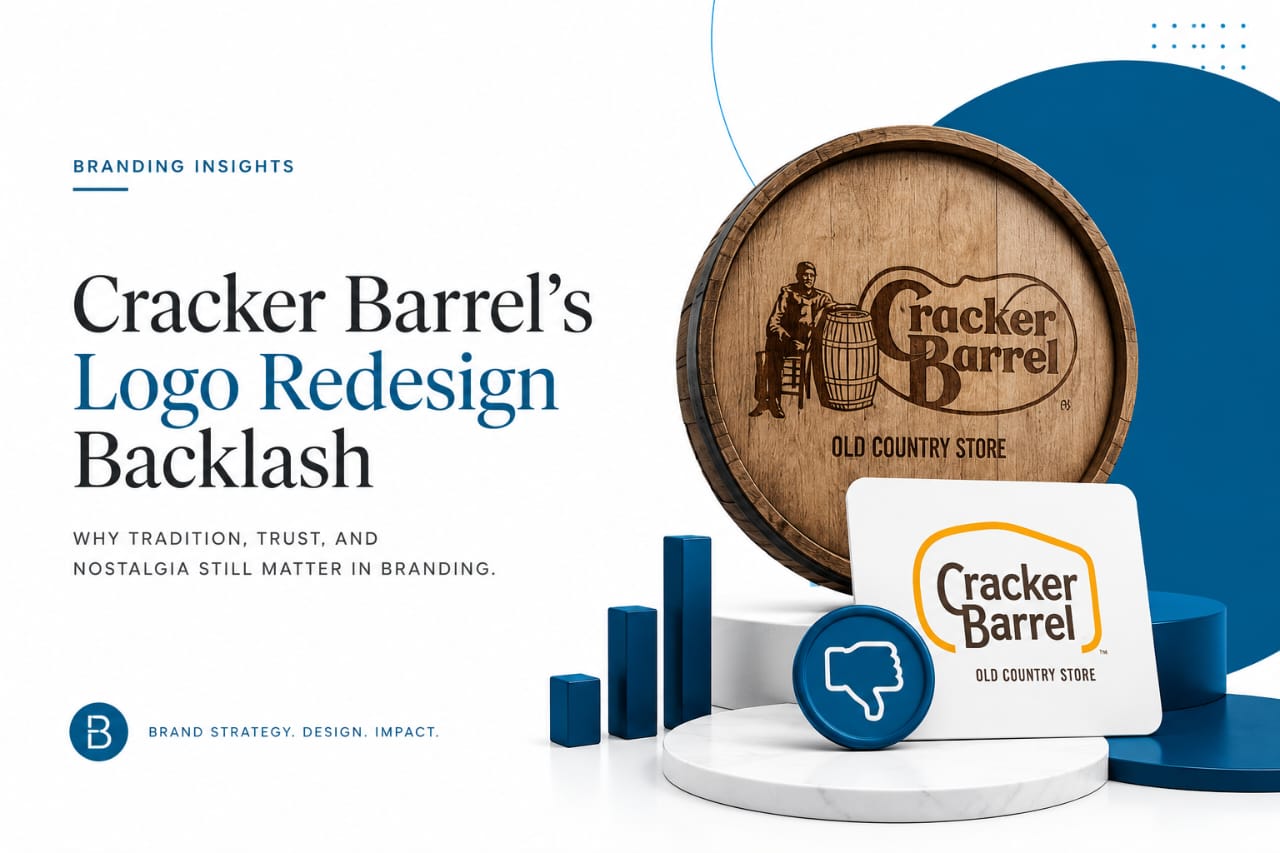
When Cracker Barrel unveiled its new minimalist, text-only logo-removing the iconic “Uncle Herschel” figure leaning on a barrel—the reaction was immediate and overwhelmingly negative. Since 1977, the rustic illustration has symbolized the brand’s promise of homestyle comfort and nostalgia. By stripping it away, the company not only lost a visual but also disrupted decades of emotional brand equity (CBS News, Washington Post, Nation’s Restaurant News).
The Immediate Fallout: Outcry and Stock Drop
Social media lit up within hours of the reveal. Loyalists and conservative commentators blasted the logo, calling it “soulless” and even “woke.” Donald Trump Jr. tweeted: “WTF is wrong with @CrackerBarrel??!” (Daily Beast, Washington Post).
The backlash quickly hit Wall Street. Shares of Cracker Barrel tumbled—some reports pegged the loss at over 7%, equating to nearly $94 million in market value (People, Newsweek), while other analyses noted a steeper 16% plunge, wiping out roughly $195 million (AInvest).
David E. Johnson of Strategic Vision PR Group summarized the failure: “By stripping out its iconic imagery … Cracker Barrel severed the single most recognizable cue in its entire story: front-porch nostalgia.” (PR Daily).
A Branding Misstep: Nostalgia vs. Minimalism
Cracker Barrel’s new logo leaned into the trend of corporate minimalism—clean, text-only wordmarks like those adopted by many tech brands. But unlike tech disruptors, Cracker Barrel’s power has always come from its heritage storytelling. The image of Uncle Herschel and the barrel evoked not just a restaurant, but the feeling of being on a country porch.
Removing this symbol diluted brand identity, making it appear generic and disconnected from its loyal base (PR Daily, CBS News).For heritage-rich companies, working with an expert branding company helps strike the right balance between modernity and legacy.
Balancing Innovation and Tradition
CEO Julie Masino defended the redesign as part of a modernization effort. The broader plan includes brighter restaurant interiors, expanded menus with burgers and margaritas, and an updated guest experience check Washington Post, Nation’s Restaurant News .
The intent was understandable: rejuvenate a struggling legacy chain. But the execution was flawed. Branding experts stress that heritage-heavy companies must evolve carefully. Best practices include:
-
Refresh, don’t erase. Update iconic elements instead of discarding them.
-
Phase changes gradually. Introduce new branding digitally while keeping legacy icons in-store.
-
Reinforce storytelling. Tie modern updates to heritage through décor, rituals, and menu touchpoints.
-
Test audience reactions. Understand how deeply brand symbols resonate before making radical shifts.
As Wharton professor Americus Reed explained, the redesign ignored the “just noticeable difference” rule—brands should evolve subtly, so core memory structures remain intact (Washington Post).
The Quick Reversal
Facing mounting pressure, Cracker Barrel announced within days that it would revert to its original logo. Uncle Herschel and the barrel would remain central to the company’s identity in stores, menus, and marketing collateral (Reuters, CBS News).
In its statement, the company reassured customers: “The values this company was built on will never change.” (People). Stocks partially recovered after the reversal, and the decision helped stabilize brand trust.
Key Branding Takeaways
-
Heritage is an asset, not a liability. Symbols that carry decades of meaning should be preserved, not erased.
-
Minimalism must fit the narrative. For heritage brands, stripping detail can strip soul.
-
Audience engagement is critical. Loyal customers form the emotional core of a brand; their sentiment cannot be ignored.
-
Change should be evolutionary, not revolutionary. Gradual adaptation allows audiences to adjust.
-
Be ready to course-correct. Swift acknowledgment of mistakes can restore goodwill faster than defensiveness.
Cracker Barrel’s logo saga is more than a design debate—it’s a case study in brand identity management. For marketers and brand custodians, it underlines the delicate balance between modern relevance and cultural legacy. Change is essential, but when executed carelessly, it risks eroding the very foundation of brand loyalty. Agencies like Antraajaal specialize in guiding businesses through this balance—ensuring modernization strengthens, not weakens, brand trust.

Written by
Dr. Deepika Bahri
Dr. Deepika Bahri is a passionate Branding and Digital Marketing expert with a Doctorate in Marketing, specializing in Brand Strategy and Digital Transformation. With over Two Decades of experience in the media, advertising, and communication industry, she brings a unique blend of academic insight and real-world business acumen. She has also been honored with an Honorary Doctorate for her contribution to Women Empowerment, recognizing her efforts in mentoring, uplifting, and creating platforms for women-led enterprises. Currently serving as the CEO of Antraajaal, a leading branding and advertising agency, Dr. Bahri is committed to sharing insights on branding, marketing strategy, women leadership, and digital growth through her writing and speaking engagements.
Need Expert Guidance?
Antraajaal builds purpose-led brand identities for serious businesses.
Brand strategy, identity and digital presence — one integrated system, built to lead across North India.
Our Services