 Dr. Deepika Bahri
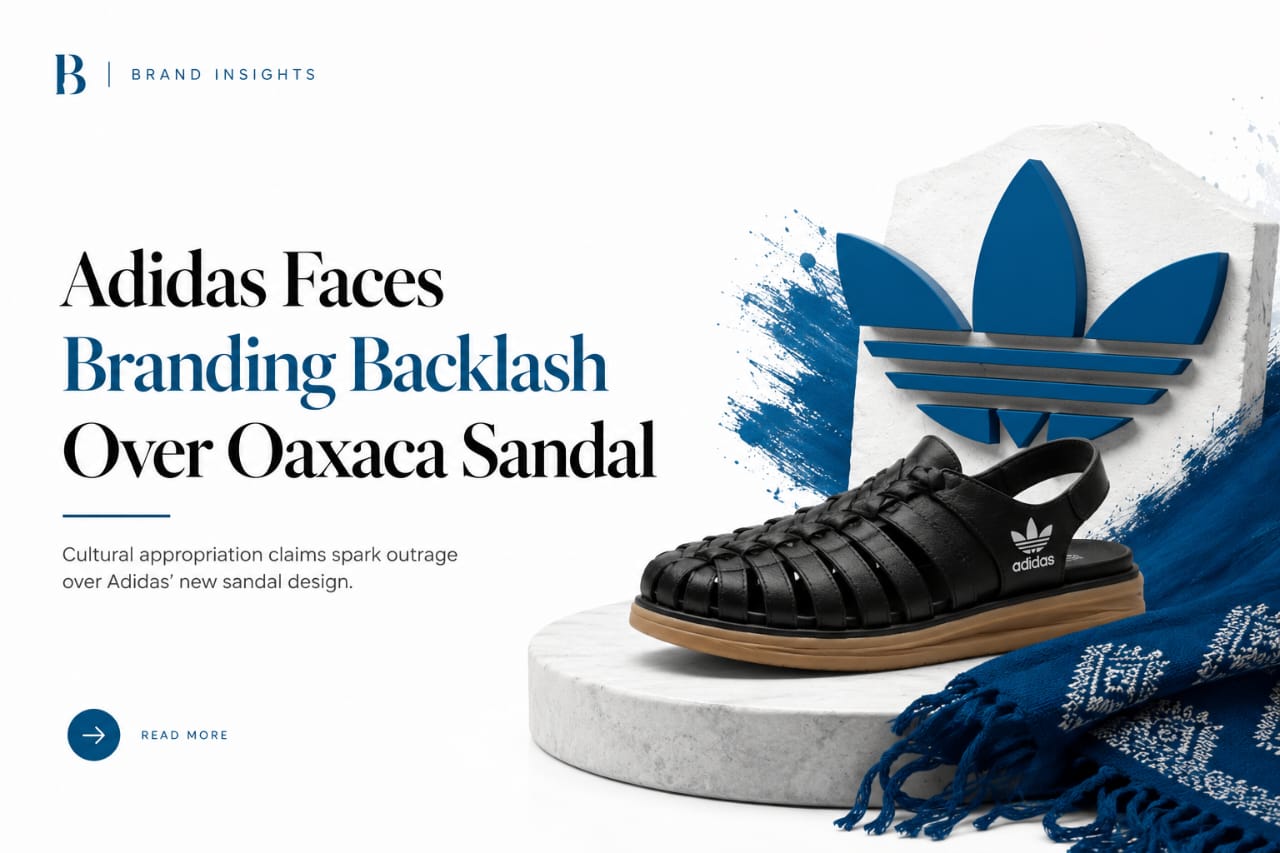
Adidas Faces Cultural Appropriation Accusations
Mexico City: Adidas is under fire in Mexico after government officials accused the global sportswear giant of cultural appropriation for a sandal design that closely resembles traditional Zapotec footwear. The controversy, centered on Adidas Originals’ recently unveiled “Oaxaca Slip-On”, has reignited debate over how global fashion brands use Indigenous cultural elements — and what responsibilities they bear to the communities that inspire them.
The Spark: From Huaraches to High Fashion
The disputed design, created by Mexican-American designer Willy Chavarría for Adidas Originals, features interlaced leather straps strikingly similar to the Zapotec huaraches — a centuries-old sandal style made by artisans in Villa Hidalgo de Yalálag, Oaxaca. These sandals are more than footwear; they are cultural artifacts, passed down through generations and deeply embedded in community identity.
In Mexico, such designs are recognized as collective cultural heritage — not owned by any one individual but by the community at large. This means they are protected under Mexican law, which prohibits unauthorized commercial use without community consent or benefit-sharing.
Government Reaction: ‘Culture Isn’t Sold, It’s Respected’
The backlash was swift. Oaxaca’s Governor, Salomón Jara Cruz, condemned Adidas for allegedly using the design without consulting the artisans or the local government.
“Culture isn’t sold — it’s respected,” Jara said in a public statement, calling for the immediate withdrawal of the product and a formal apology to the Zapotec community.
The Mexican government has been increasingly proactive in challenging what it sees as exploitative use of Indigenous motifs by major brands. President Claudia Sheinbaum confirmed that Adidas is in negotiations with Oaxaca officials to provide reparations and that the federal government is working on legal reforms to better protect Indigenous cultural expressions.
Adidas’s Response: Willingness to Repair
In its official statement, Adidas emphasized that it “deeply values the cultural wealth of Mexico’s Indigenous communities” and is open to dialogue with authorities and artisans to “repair the damage.” While the company did not immediately commit to withdrawing the sandal, insiders suggest negotiations could lead to either compensation agreements or a collaborative relaunch that credits and benefits the original artisans.
Why It Matters: More Than a Shoe
The controversy is not only about intellectual property; it’s about respect, representation, and economics. Oaxaca is one of Mexico’s richest states in terms of artisanal heritage, with handicrafts ranging from intricate textiles to traditional footwear.
The handicraft sector is an economic pillar:
-
Supports over 500,000 jobs in states like Oaxaca, Jalisco, Michoacán, and Guerrero.
-
Contributes up to 10% of regional GDP.
-
Provides livelihoods in rural and Indigenous communities with limited alternative employment opportunities.
When multinational corporations use these designs without consent, communities lose potential income, visibility, and recognition — while the brand profits from their heritage.
Public Awareness and Concern: What Consumers Think
Cultural appropriation is not only a legal or political matter — it is strongly shaped by consumer perception. Surveys indicate that awareness is extremely high across generations:
-
89% of Baby Boomers
-
87% of Gen X
-
85% of Millennials
-
81% of Gen Z
believe cultural appropriation exists (Campus Reform, Teen Vogue, GPE Journal).
Moreover, behavior is affected. Around 36% of young adults (18–24) and 27% of those aged 25–34 report avoiding cultural expressions out of fear of offending others. Interestingly, perceptions vary sharply by age: 34% of 18–24-year-olds believe non-Black individuals wearing cornrows or dreadlocks is harmful, while only 17% of those over 65 share this view.
For Adidas, this means cultural controversies do not remain niche debates — they directly affect brand perception across multiple demographics.
Not Adidas’s First Cultural Controversy
While Adidas is better known for its collaborations with designers and cultural icons, it’s not immune to criticism over cultural insensitivity. This latest incident aligns with a pattern seen across the fashion industry, where global brands face accusations of extracting inspiration without giving back.
A Pattern in Global Fashion
Mexico has clashed with several fashion houses over similar cases:
-
Zara (2021) – Accused of copying embroidery from Oaxaca’s Mixtec community.
-
Carolina Herrera (2019) – Criticized for using Indigenous embroidery patterns without attribution.
-
Anthropologie & Patowl – Allegedly used traditional Mexican designs without permission.
Globally, too:
-
Urban Outfitters (USA) – Settled lawsuit with the Navajo Nation over misuse of “Navajo” branding.
-
Louis Vuitton (France) – Criticized for selling a blanket resembling Basotho designs.
-
Gucci (Italy) – Accused of appropriating Sikh turbans.
Why People React Differently: The Role of Diversity Ideologies
Perceptions of appropriation are not universal — they are shaped by underlying cultural ideologies.
-
Those who embrace multiculturalism judge appropriation more harshly.
-
People with colorblind or polycultural views are more lenient (Frontiers in Social Psychology, 2025).
-
Research also shows the strongest predictor of whether an act is labeled appropriation is the perceived harm it causes to the originating community (SAGE Journals, 2023).
This explains why Adidas may face stronger backlash in societies that emphasize cultural distinctiveness and harm-avoidance, while reactions may be softer in markets where cultural mixing is normalized.
Legal Landscape: Protecting Collective Heritage
Mexico’s Federal Law for the Protection of Cultural Heritage of Indigenous and Afro-Mexican Peoples and Communities allows the government to act when brands use cultural elements without consent. However, enforcement is challenging:
-
Heritage is often passed orally and lacks formal registration.
-
Global supply chains make tracing design origins complex.
-
International intellectual property laws often prioritize individual creators, not collective ownership.
This Adidas case could strengthen Mexico’s push for international recognition of collective cultural rights — similar to how UNESCO protects intangible cultural heritage.
The Designer’s Role: Inspiration vs. Appropriation
Willy Chavarría, the Mexican-American designer behind the sandal, is celebrated for integrating Chicano and Latino influences into mainstream fashion. Yet the controversy raises complex questions:
-
Should designers of Indigenous descent still seek formal permission when using protected cultural motifs?
-
Can personal heritage justify commercial use without direct benefit to the originating community?
These questions sit at the heart of the appropriation debate, where authentic representation often collides with commercial realities.
Brand Damage and Consumer Perception
Adidas’s global image as a socially responsible brand is at stake. In an era where over 80% of consumers recognize appropriation and a third of young adults alter their behavior due to cultural sensitivity, missteps can trigger:
-
Boycotts and social backlash.
-
Loss of trust in key growth markets.
-
Long-term reputational harm.
Conversely, brands that admit mistakes and share benefits equitably can transform crises into opportunities for authentic collaboration.
Path Forward: From Controversy to Collaboration
If Adidas handles this constructively, the incident could become a case study in responsible branding:
-
Formal Apology – Recognizing the harm done.
-
Benefit-Sharing Agreements – Direct sales revenue supporting artisans.
-
Co-Creation Models – Indigenous communities involved in design.
-
Cultural Training – Educating teams about consent and heritage.
Also Read: Story of Prada Kulhapuri
A Turning Point for Cultural Fashion Rights
The Adidas sandal dispute underscores a global challenge: balancing creative freedom with cultural responsibility. For Mexico, it is part of a larger national strategy to protect Indigenous heritage — not just as art, but as a living cultural and economic asset.
As Oaxaca’s governor firmly stated:
“We will not allow the theft of our peoples’ identity. Our traditions are not trends — they are the soul of our communities.”
And as branding professionals, we know plagiarism in any form weakens trust. Passing credit to the original creator is not just an ethical obligation — it is a brand’s license to operate in a culturally aware world.
As legal reforms advance and consumer awareness grows, brands will increasingly be called to account and collaboration, not appropriation, will define the future of cultural fashion.
We being into the branding industry since years, have observed that plagiarism in any form needs stricter reforms. The credit must be passed on to the original creator.

Written by
Dr. Deepika Bahri
Dr. Deepika Bahri is a passionate Branding and Digital Marketing expert with a Doctorate in Marketing, specializing in Brand Strategy and Digital Transformation. With over Two Decades of experience in the media, advertising, and communication industry, she brings a unique blend of academic insight and real-world business acumen. She has also been honored with an Honorary Doctorate for her contribution to Women Empowerment, recognizing her efforts in mentoring, uplifting, and creating platforms for women-led enterprises. Currently serving as the CEO of Antraajaal, a leading branding and advertising agency, Dr. Bahri is committed to sharing insights on branding, marketing strategy, women leadership, and digital growth through her writing and speaking engagements.
Need Expert Guidance?
Antraajaal builds purpose-led brand identities for serious businesses.
Brand strategy, identity and digital presence — one integrated system, built to lead across North India.
Our Services