 Dr. Deepika Bahri
This blog has been inspired by “Brand Desire” by Nicholas Ind and Oriol Iglesias
Introduction: Visibility Is Not Victory
For decades, branding was mistaken for visibility.
Logos, advertising frequency, media spend, recall metrics — these were considered indicators of brand strength.
But visibility creates awareness.
Desire creates loyalty.
In Brand Desire, Nicholas Ind and Oriol Iglesias argue that modern brands must move beyond exposure and into emotional, participatory meaning-making. A brand today is not what a company says it is. It is what stakeholders collectively experience, interpret, and internalize.
At Antraajaal, we believe branding is not graphic design — it is emotional architecture.
This blog explores why meaningful brands outperform visible brands, and how businesses — especially in India — can build enduring brand desire.
The Shift: From Transaction to Transformation
Traditional branding operated on a transactional logic:
- Identify target audience
- Craft message
- Broadcast consistently
- Measure recall
The new paradigm is different.
Modern consumers are:
- Digitally literate
- Ethically aware
- Socially expressive
- Experience-driven
They don’t just buy products. They buy:
- Beliefs
- Identity
- Community
- Alignment
When someone chooses Tata Group, they are not just choosing steel, salt, or cars. They are choosing trust.
When someone interacts with Zomato, they are not just ordering food — they are engaging with a brand voice that feels human, witty, and contemporary.
This is brand meaning.
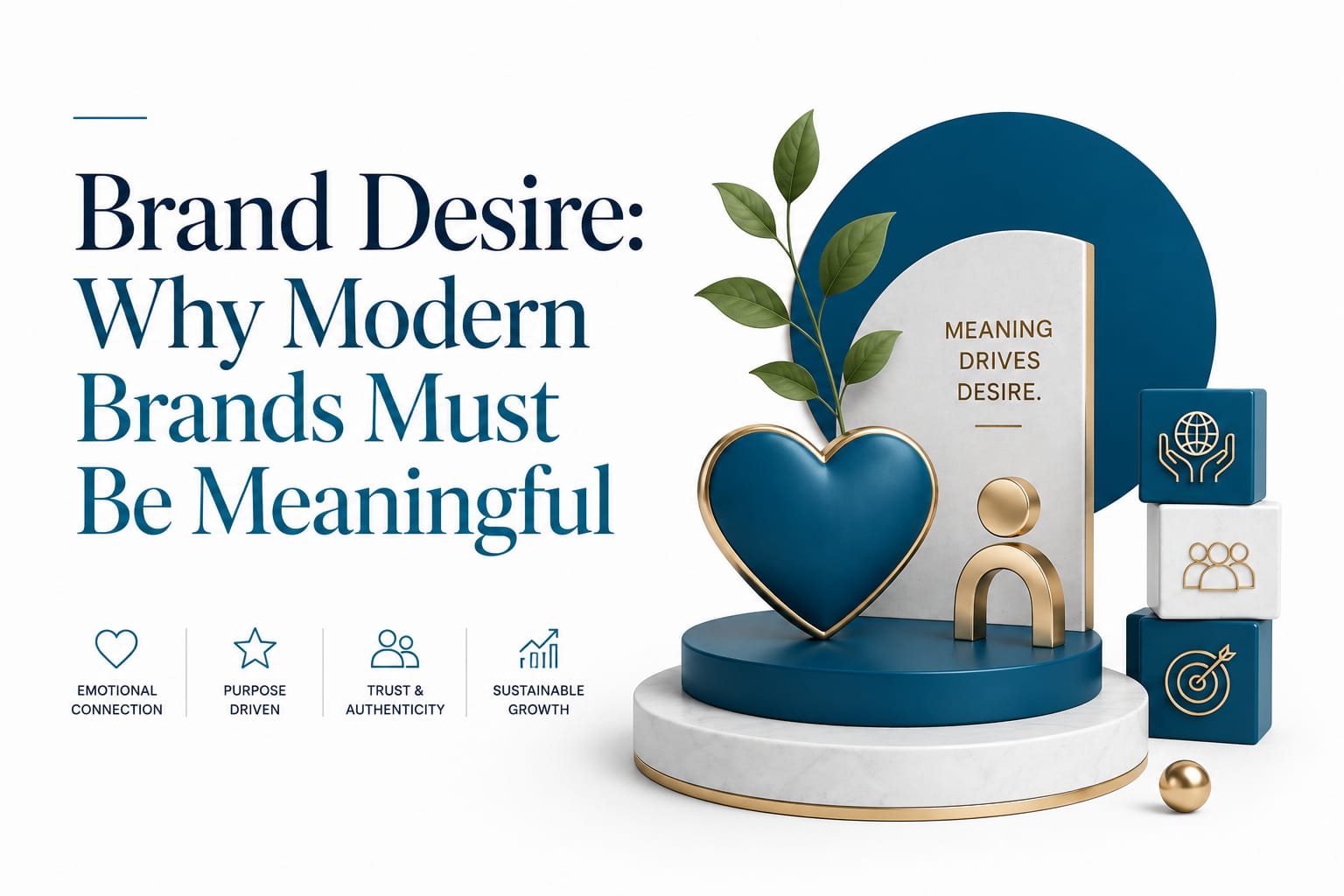
And meaning generates desire.
What Is Brand Desire?
Brand desire is not impulse.
It is emotional commitment.
It happens when:
- A brand reflects personal values
- A brand participates in cultural dialogue
- A brand creates shared experiences
- A brand feels authentic
Desire is built through participation, not persuasion.
In the past, brands controlled narratives.
Today, narratives are co-created.
Consumers:
- Review publicly
- Comment openly
- Critique transparently
- Amplify instantly
A brand is now a living ecosystem.
Why Meaningful Brands Win
Research in behavioral economics and identity theory shows that humans make decisions emotionally first and rationally later. Functional superiority alone rarely builds enduring loyalty.
Meaningful brands outperform because they:
1. Reduce Cognitive Dissonance
Customers feel aligned. There is no internal conflict between purchase and personal belief.
2. Create Psychological Safety
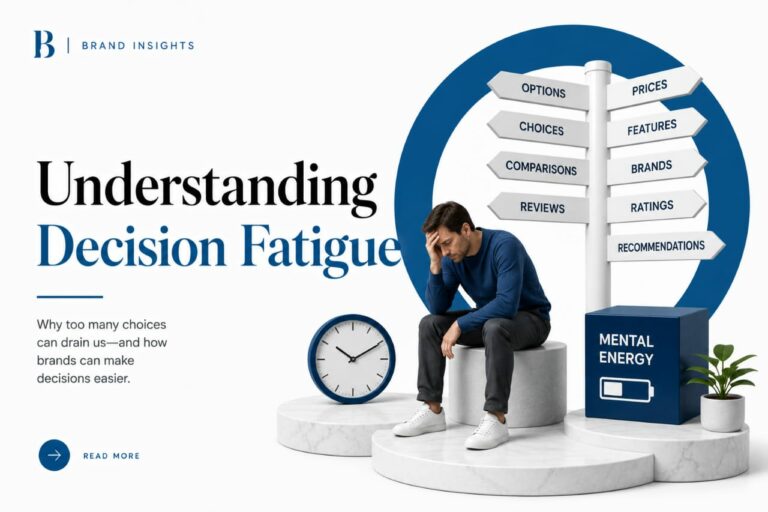
Trust lowers decision fatigue.
3. Enable Identity Expression
Brands become badges of belonging.
4. Foster Community
Communities amplify brand equity organically.
This is why cult brands exist.
Not because of ad spend.
But because of shared belief systems.
Visibility Without Meaning Is Noise
In the age of algorithmic feeds, attention is fragmented.
You can:
- Run ads
- Boost posts
- Buy impressions
But without a core narrative and emotional anchor, visibility becomes digital clutter.
Many businesses in India invest heavily in:
- Website aesthetics
- Social media presence
- Influencer promotions
But neglect:
- Brand philosophy
- Internal culture alignment
- Stakeholder experience consistency
The result?
Temporary traction.
No long-term brand equity.
The Indian Business Context: A Turning Point
Indian consumers are evolving rapidly.
Gen Z and millennials expect:
- Transparency
- Social responsibility
- Ethical positioning
- Personalization
Purpose is no longer CSR activity.
It is strategic positioning.
Brands that succeed in India today:
- Have cultural sensitivity
- Understand regional nuance
- Balance tradition with modernity
- Communicate with emotional intelligence
Brand desire in India must be locally rooted and globally aware.
From Branding as Design to Branding as System
At Antraajaal as a Branding Company in Chandigarh, we approach branding as a system comprising:
- Belief Architecture
What does the brand stand for beyond profit? - Narrative Framework
How is the story consistently told across touchpoints? - Experience Design
Does every interaction reinforce meaning? - Cultural Relevance Mapping
Is the brand in conversation with society? - Stakeholder Alignment
Do employees embody the brand?
If internal culture and external messaging diverge, desire collapses.
Brand desire must be experienced internally before it can be communicated externally.
The Role of Co-Creation
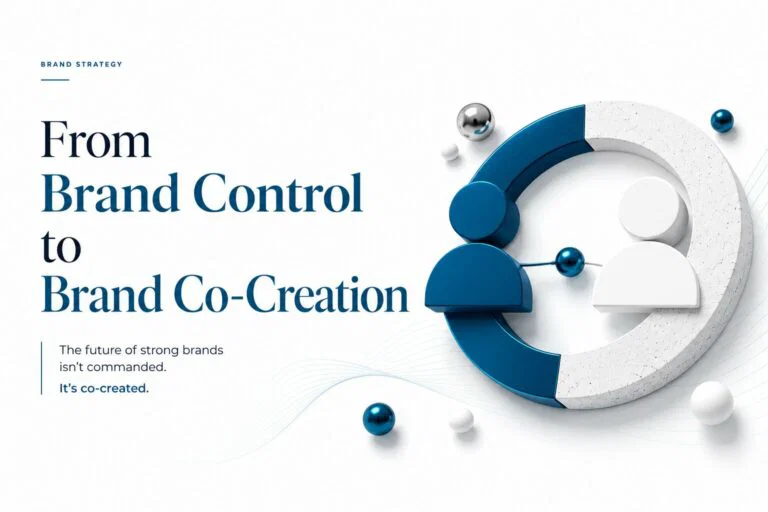
One of the most powerful insights from Brand Desire is the idea that brands are co-created with stakeholders.
This includes:
- Employees
- Customers
- Communities
- Partners
Co-creation builds ownership.
Ownership builds advocacy.
Advocacy builds desire.
Brands that listen outperform brands that broadcast.
AI, Data, and Emotional Precision
In 2026, branding cannot ignore artificial intelligence.
AI enables:
- Behavioral pattern analysis
- Micro-segmentation
- Predictive personalization
But technology alone cannot create desire.
Desire requires:
- Empathy
- Storytelling
- Ethical positioning
- Cultural fluency
The future of branding lies in combining data intelligence with human insight.
At Antraajaal, we integrate:
- Strategic thinking
- Emotional storytelling
- Digital intelligence
Because desire is engineered at the intersection of psychology and strategy.
How Businesses Can Build Brand Desire
Here is a practical roadmap:
Step 1: Define Your Core Belief
Not mission. Not vision.
Belief.
What tension in the world does your brand respond to?
Step 2: Align Internal Culture
Your employees are your first audience.
Step 3: Design Emotional Touchpoints
Every interaction must reinforce identity.
Step 4: Participate in Dialogue
Stop broadcasting. Start conversing.
Step 5: Commit to Consistency
Desire requires predictability of values.
Conclusion: The Desire Economy
We are no longer in the attention economy.
We are in the desire economy.
Attention is rented.
Desire is owned.
Modern brands must:
- Stand for something
- Engage authentically
- Build participatory ecosystems
- Align profit with purpose
Visibility may bring traffic.
Meaning builds legacy.
At Antraajaal, we help businesses transition from being seen to being sought after — from branding as decoration to branding as transformation.
Because the brands that win tomorrow are not the loudest.
They are the most meaningful.

Written by
Dr. Deepika Bahri
Dr. Deepika Bahri is a passionate Branding and Digital Marketing expert with a Doctorate in Marketing, specializing in Brand Strategy and Digital Transformation. With over Two Decades of experience in the media, advertising, and communication industry, she brings a unique blend of academic insight and real-world business acumen. She has also been honored with an Honorary Doctorate for her contribution to Women Empowerment, recognizing her efforts in mentoring, uplifting, and creating platforms for women-led enterprises. Currently serving as the CEO of Antraajaal, a leading branding and advertising agency, Dr. Bahri is committed to sharing insights on branding, marketing strategy, women leadership, and digital growth through her writing and speaking engagements.
Need Expert Guidance?
Antraajaal builds purpose-led brand identities for serious businesses.
Brand strategy, identity and digital presence — one integrated system, built to lead across North India.
Our Services