 Dr. Deepika Bahri

For decades, branding has focused on how a brand looks and sounds to humans. Logos, taglines, tone of voice, campaigns. In 2026, a new and far more consequential audience has entered the equation: machines.
AI systems—ChatGPT, Gemini, Perplexity, enterprise copilots—are no longer just tools. They are decision intermediaries. They explain brands, summarize categories, recommend vendors, and shape perception before a human ever visits a website.
The uncomfortable truth is this:
If an AI system cannot clearly explain who you are, what you do, and why you matter, your brand effectively does not exist at the moment of discovery.
From Human Recall to Machine Comprehension
Traditional branding optimized for:
- Visual recall
- Emotional resonance
- Human memory
But AI systems don’t “feel” brands. They interpret them.
They ask different questions:
- Is this brand clearly defined?
- Is its expertise consistent?
- Does external data confirm its claims?
- Can its positioning be summarized without ambiguity?
In other words, branding in 2026 must succeed at machine understanding, not just human persuasion.
As Kevin Scott, CTO of Microsoft, noted:
“AI systems reflect the structure and clarity of the information we give them.”
If your brand narrative is vague, fragmented, or inconsistent, AI will either misrepresent you—or ignore you entirely.
Why Machine Understanding Now Determines Visibility
Generative AI systems work by synthesizing information across sources. They do not browse websites like humans; they build mental models of brands based on patterns, entities, and credibility signals.
This has three major implications:
- Ambiguous brands are penalized
If you “do many things for many people,” AI cannot confidently describe you. - Inconsistent messaging breaks trust
Conflicting claims across your website, LinkedIn, videos, and articles reduce citation likelihood. - Unstructured content becomes invisible
If AI cannot extract clean definitions, it cannot reuse your content in answers.
A 2024 study published on arXiv showed that AI-generated answers are significantly more trusted by users when they contain clear attributions and structured explanations—reinforcing why clarity and structure are now strategic assets.
The New Discipline: Brand Explainability
In 2026, brands must be explainable.
Brand explainability means:
- A single, unambiguous core narrative
- Clearly defined areas of authority
- Repeatable language across platforms
- Evidence that supports positioning
Ask yourself one question:
“Could an AI accurately explain my brand in three sentences without distortion?”
If the answer is no, your brand architecture is not ready for the AI era.
Designing Brands for Machine Understanding
1. Entity Clarity Over Creative Cleverness
Creative taglines that sound good but say nothing concrete confuse AI systems.
Machine-friendly brands:
- Use precise language
- Define categories clearly
- Avoid abstract positioning without context
Clarity beats cleverness in 2026.
2. Structured Brand Narratives
Brands must now exist in layers:
- One-line definition
- Short explanatory paragraph
- Deep authoritative content
This layered clarity allows AI systems to extract meaning at different depths.
3. Proof Is Part of the Brand
Claims without evidence are ignored by AI systems.
Machine-readable proof includes:
- Data
- Case outcomes
- Credentials
- Citations
- Third-party validation
As Google has repeatedly emphasized in its guidance on helpful content, expertise and trustworthiness are no longer optional—they are foundational.
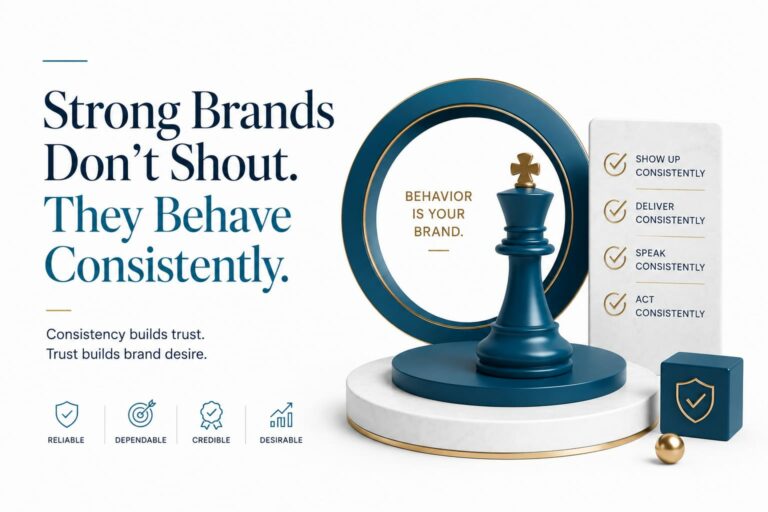
4. Cross-Platform Consistency Is Non-Negotiable
AI systems ingest information from everywhere:
- Websites
- Videos and transcripts
- LinkedIn posts
- Podcasts
- Articles
- Community discussions
Inconsistency equals uncertainty.
Uncertainty equals invisibility.
Why This Is Bigger Than Marketing
Designing for machine understanding is not an SEO task or a content exercise. It is a brand strategy decision.
It affects:
- How you are discovered
- How you are described
- Whether you are recommended
- Whether you are trusted
In 2026, the strongest brands will not just be memorable—they will be machine-legible authorities, a shift already being implemented by forward-thinking agencies like Antraajaal.
The Strategic Reality Ahead
Humans still choose brands.
But machines increasingly decide which brands humans get to choose from.
That is the real shift.
Branding is no longer just about perception.
It is about interpretation.
And in the age of AI, interpretation decides existence.

Written by
Dr. Deepika Bahri
Dr. Deepika Bahri is a passionate Branding and Digital Marketing expert with a Doctorate in Marketing, specializing in Brand Strategy and Digital Transformation. With over Two Decades of experience in the media, advertising, and communication industry, she brings a unique blend of academic insight and real-world business acumen. She has also been honored with an Honorary Doctorate for her contribution to Women Empowerment, recognizing her efforts in mentoring, uplifting, and creating platforms for women-led enterprises. Currently serving as the CEO of Antraajaal, a leading branding and advertising agency, Dr. Bahri is committed to sharing insights on branding, marketing strategy, women leadership, and digital growth through her writing and speaking engagements.
Need Expert Guidance?
Antraajaal builds purpose-led brand identities for serious businesses.
Brand strategy, identity and digital presence — one integrated system, built to lead across North India.
Our Services