
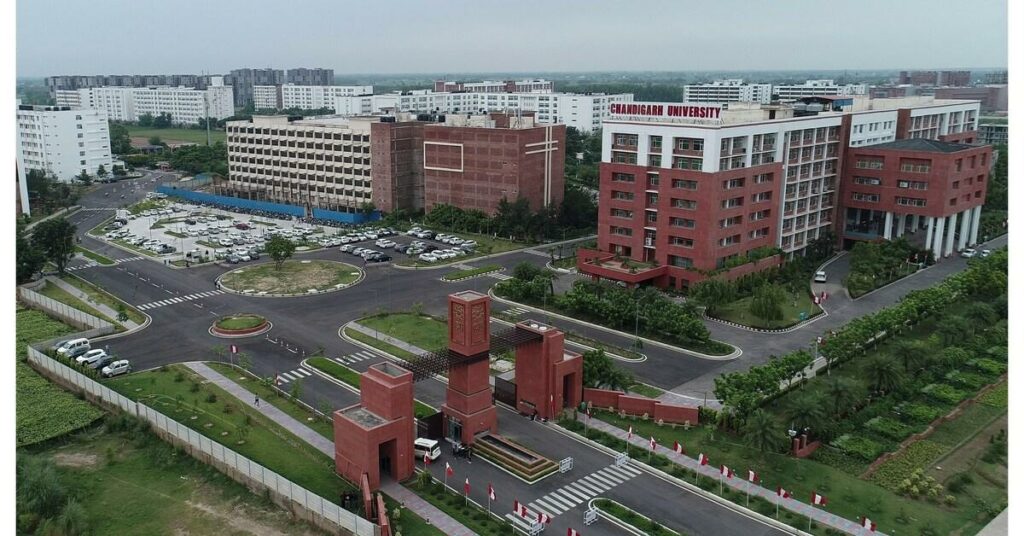
On 6th February 2026, Chandigarh University hosted “Budget Manthan 2026”, a high-impact conference focused on analyzing and debating the implications of the Union Budget 2026. The event brought together financial strategists, corporate leaders, compliance experts, media professionals, and entrepreneurs for an in-depth discussion on the economic roadmap of the nation.
The atmosphere was intellectually vibrant, with rigorous debate, practical insights, and forward-looking interpretations of fiscal policy announcements.
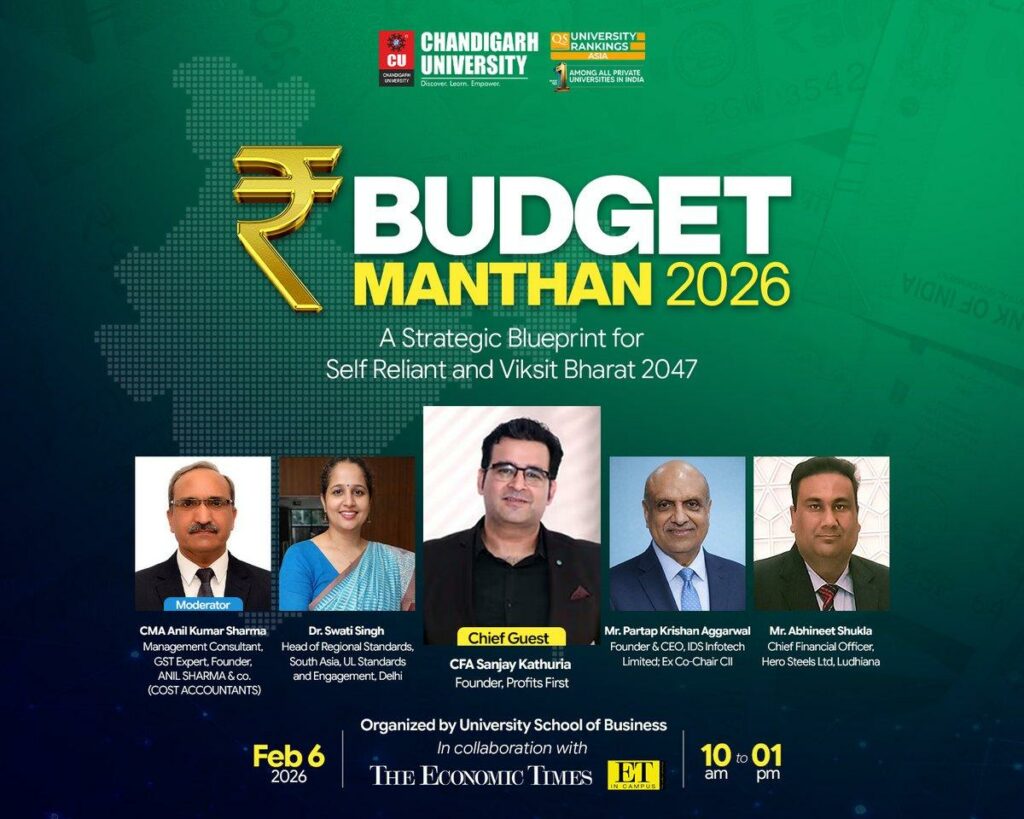
Panel of Experts
The panel featured a distinguished lineup of leaders from diverse sectors. Sanjay Kathuria, India’s top business coach and Founder of Profits First, shared sharp insights on profitability, financial discipline, and sustainable business scaling in the post-budget landscape.
Dr. Swati Singh, Head of Regional Standards, South Asia at UL Standards & Engagement, provided a regulatory and compliance perspective, emphasizing the importance of aligning Indian businesses with global standards to enhance competitiveness.
From the manufacturing and finance sector, Pratap Krishan Agarwal, CFO of Hero Steels, evaluated the budget’s impact on capital expenditure, industrial growth, and fiscal management from a corporate standpoint.
Adding a media and communication lens, Vishal Sharma, Associate GM at The Times of India Group, discussed the expanding role of the digital economy and how policy decisions influence media ecosystems and public sentiment.
The discussion was further enriched by Dr. Deepika Bahri, Founder & CEO of Antraajaal, who highlighted the strategic importance of branding, leadership positioning, and communication in navigating policy-driven market transitions. Several other industry experts and academicians also contributed meaningfully, making the discussion multidimensional and comprehensive.
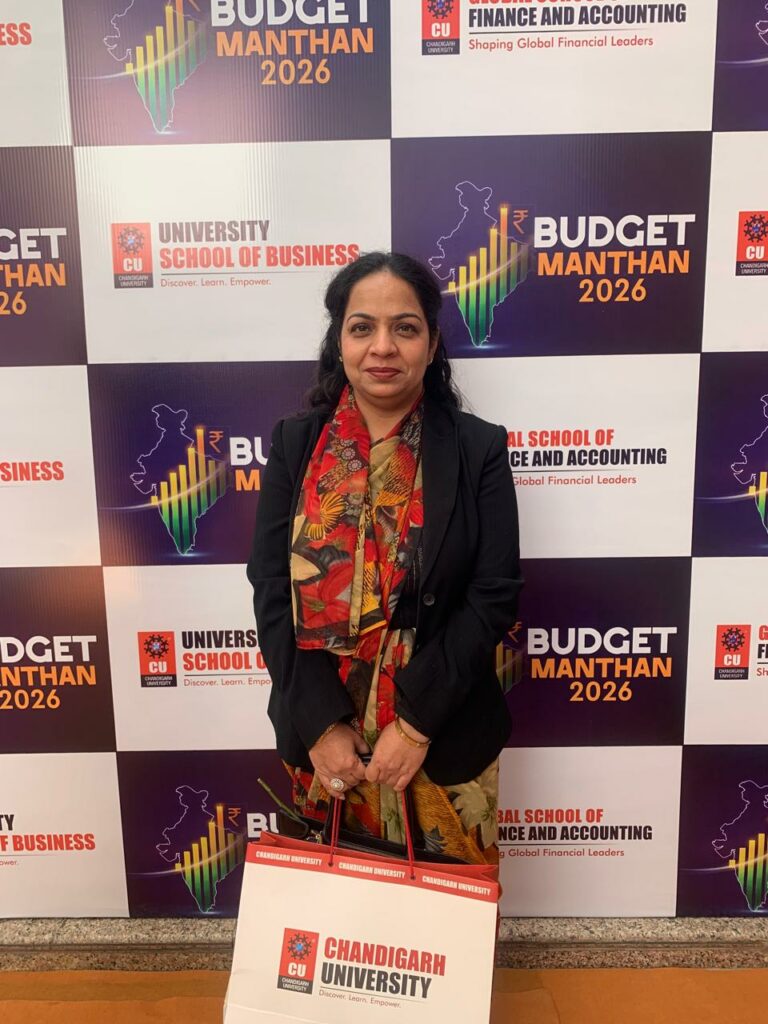
👉 Watch the Budget Manthan 2026 Event Highlights
Key Highlights from Budget Manthan 2026
1. MSME & Startup Ecosystem
The panel acknowledged increased incentives for MSMEs and startups as a positive move. However, discussions also focused on the challenges of implementation, ease of credit access, and the need for structured financial planning over aggressive expansion.
2. Taxation & Fiscal Discipline
There was detailed debate on tax rationalization, consumption-driven growth, and fiscal deficit targets. Experts stressed that sustainable economic expansion requires disciplined execution alongside ambitious policy design.
3. Manufacturing & Infrastructure Push
Heavy capital allocation toward infrastructure and manufacturing was viewed as a long-term catalyst for growth. Industry voices emphasized how sectors like steel, logistics, and allied industries could benefit from consistent infrastructure spending.
4. Regulatory & Global Standards
The growing focus on ESG compliance and global standards was appreciated, though panelists highlighted the need for capacity-building within Indian enterprises to meet international benchmarks effectively.
5. Digital Economy & Communication
The expansion of digital infrastructure was seen as a transformative driver. Strategic communication, brand positioning, and policy literacy were identified as critical differentiators for businesses adapting to the new economic framework.
Conclusion
Budget Manthan 2026 was not merely a review of fiscal announcements—it was a strategic brainstorming platform where diverse industry voices analyzed both the opportunities and limitations of the Union Budget 2026. The session underscored that while the budget provides a growth-oriented framework, its real impact will depend on implementation efficiency, regulatory clarity, and responsible corporate leadership.
The conference at Chandigarh University successfully created a bridge between academia and industry, offering participants a nuanced understanding of India’s evolving economic direction.