 Dr. Deepika Bahri
Branding is no longer just about a clever logo or catchy tagline. By 2026, it has evolved into an ecosystem of authenticity, technology, community, and sustainability. Brands that thrive will be the ones that balance AI-powered innovation with human-centric storytelling.
Let’s explore the 11 major branding trends shaping 2026, with examples, data, and insights.
1. Hyper-Personalization Becomes the Default
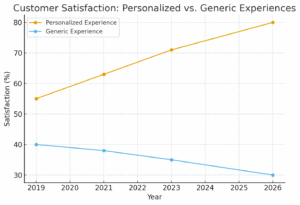
Gone are the days of mass messaging. AI-driven personalization now defines branding. By 2026, brands will be tailoring everything — from website layouts to packaging — based on real-time customer data.
📊 Chart Suggestion: “Customer Satisfaction Levels with Personalized vs. Generic Experiences (2023–2026)”
- Example: Spotify’s “Discover Weekly” playlist delivers a unique experience for each listener, creating loyalty through personalization.
- Insight: According to McKinsey, 71% of consumers expect personalization and 76% feel frustrated without it.
2. Purpose-Driven Branding as Trust Currency
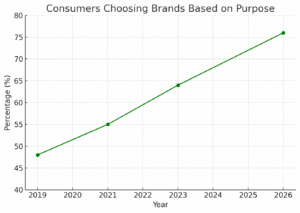
Consumers increasingly buy from brands that align with their values. In 2026, purpose will equal profit.
📊 Chart Suggestion: “Percentage of Consumers Choosing Brands Based on Purpose (2019–2026 projection)”
- Example: Patagonia donating all profits to environmental causes.
- India Context: Tata Group consistently ranks high on trust due to its social impact programs.
- Insight: Edelman reports 64% of global consumers are belief-driven buyers — this is projected to surpass 75% by 2026.
3. Phygital Brand Worlds (AR/VR/MR)
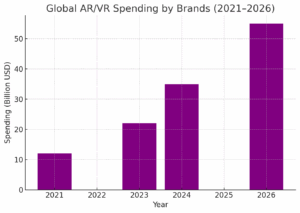
The future of branding lies in immersive “phygital” spaces, blending physical and digital.
- Example: IKEA’s AR app lets you visualize furniture in your home. By 2026, expect VR fashion trials or holographic brand experiences at malls.
- Quote: “Experiences are the new products.” – Neal Stephenson
📊 Chart Suggestion: “Global AR/VR Spending by Brands (2021–2026)”
4. Community-First Branding
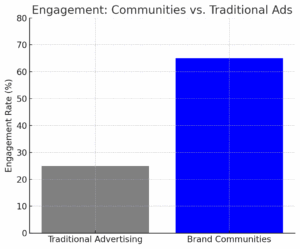
Brands are moving from audiences to communities. Instead of broadcasting messages, they are creating ecosystems where consumers co-create and advocate.
- Example: Harley Davidson’s HOG riders’ club is a lifestyle community, not just a customer group.
- Digital Example: Nike Run Club builds loyalty by connecting runners globally.
📊 Chart Suggestion: “Engagement Levels in Brand Communities vs. Traditional Advertising”
5. Sustainability → Regeneration
By 2026, being “sustainable” isn’t enough. Consumers expect brands to regenerate ecosystems, empower communities, and offset their footprints.
- Example: L’Oréal now measures product environmental impact and displays it openly.
- Trend: Circular economy models (reuse, recycle, upcycle) will become mainstream.
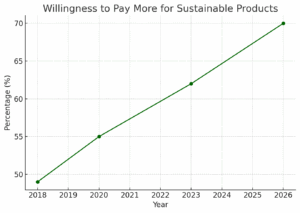
📊 Chart Suggestion: “Consumer Willingness to Pay More for Sustainable Products (2018–2026)”
6. Interactive Storytelling & Gamification
Brand storytelling will shift from linear ads to interactive journeys where customers shape outcomes.
- Example: Netflix’s Bandersnatch model inspiring brand campaigns with choice-based narratives.
- Gamified Marketing: AR treasure hunts, polls, quizzes.
📊 Chart Suggestion: “Growth of Gamified Marketing Campaigns (2022–2026)”
7. Rise of Micro & Nano Influencers
In 2026, the real power lies in small, niche influencers who offer authenticity over reach.
- Example: A dentist with 5,000 loyal Instagram followers can outperform a Bollywood celebrity for dental care branding.
- Stat: Nielsen reports 90% of consumers trust peer recommendations, compared to only 33% trusting ads.
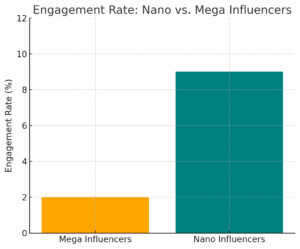
📊 Chart Suggestion: “Engagement Rate: Nano Influencers vs. Mega Influencers”
8. Adaptive Visual Identities
Static logos are outdated. Brands now need fluid visual systems that adapt to screens, devices, and moods while staying recognizable.
- Example: Google Doodles and Spotify Wrapped.
- Trend: AI-generated visuals that evolve with context.
📊 Chart Suggestion: “Percentage of Brands Using Dynamic Logos (2020–2026)”
9. Seamless Omnichannel Experiences
Customers don’t think in channels. They expect frictionless journeys from social to store to website.
- Example: Starbucks integrates payments, rewards, and orders in one app, linking digital and physical seamlessly.
- Quote: “Customers don’t think in channels. They just experience your brand.” – Jeff Bezos
📊 Chart Suggestion: “Customer Drop-Off Rates in Fragmented vs. Seamless Journeys”
10. Radical Transparency & Traceability
By 2026, consumers demand proof, not promises. Blockchain, QR codes, and digital passports will show product origins and impact.
- Example: Everledger’s blockchain tracks diamond origins.
- India Example: Farm-to-fork organic brands offering QR-code-based sourcing transparency.
📊 Chart Suggestion: “Growth in Blockchain-Enabled Transparency Solutions (2021–2026)”
11. AI as Brand Companion, Not Replacement
AI will dominate content creation, customer service, and personalization — but brands must balance it with human empathy.
- Example: Sephora uses AI chatbots for beauty advice but ensures human stylists close high-touch conversations.
- Quote: “AI won’t replace brands. But brands not using AI will be replaced.” – Sundar Pichai
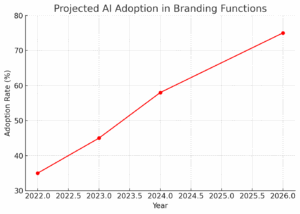
📊 Chart Suggestion: “Projected AI Adoption in Branding Functions (2022–2026)”
Final Word
Branding in 2026 is about ecosystems, not campaigns. It’s a fusion of authenticity, technology, community, and responsibility. The winners will be those who treat branding as the growth engine of business — not just its cosmetic layer. For more information, stay updated with – Antraajaal.com
Also Read:
The Significance of Colours In Logo Designing
Branding Company In Chandigarh
The Human Essence In Brand Identity
Powerful Branding: A Deep Dive Into Apple Inc.’s Marketing Mastery
Coca-Cola’s Exilir of Succes: The Unfolding Saga of A Global Beverage Brand Leader

Written by
Dr. Deepika Bahri
Dr. Deepika Bahri is a passionate Branding and Digital Marketing expert with a Doctorate in Marketing, specializing in Brand Strategy and Digital Transformation. With over Two Decades of experience in the media, advertising, and communication industry, she brings a unique blend of academic insight and real-world business acumen. She has also been honored with an Honorary Doctorate for her contribution to Women Empowerment, recognizing her efforts in mentoring, uplifting, and creating platforms for women-led enterprises. Currently serving as the CEO of Antraajaal, a leading branding and advertising agency, Dr. Bahri is committed to sharing insights on branding, marketing strategy, women leadership, and digital growth through her writing and speaking engagements.
Need Expert Guidance?
Antraajaal builds purpose-led brand identities for serious businesses.
Brand strategy, identity and digital presence — one integrated system, built to lead across North India.
Our Services