 Dr. Deepika Bahri
For nearly 20 years, brands optimized for search engines. In 2026, they will need to optimize for something far more complex—and far more influential: generative engines.
As AI systems like ChatGPT, Gemini, Perplexity, and enterprise copilots become the first point of discovery, a new discipline is emerging: Generative Engine Optimization (GEO). Unlike traditional SEO, which focused on ranking pages, GEO focuses on being selected, summarized, and cited by AI systems that generate answers on behalf of users.
This is not a cosmetic change. It is a fundamental shift in how information authority is created and rewarded.
Why SEO Alone Is No Longer Enough
Search engines historically acted as directories. They ranked pages and let humans decide which link to trust. Generative engines act differently—they synthesize information, reduce multiple sources into a single response, and often eliminate clicks altogether.
McKinsey describes AI-powered search as “the new front door to the internet,” noting that users increasingly expect direct, synthesized answers instead of lists of links. This changes the competitive battlefield entirely.
By 2026, the question for brands will not be:
“Do we rank on page one?”
It will be:
“Are we included in the answer at all?”
If your content is not selected by a generative engine, you are effectively invisible at the moment of decision.
What Is Generative Engine Optimization (GEO)?
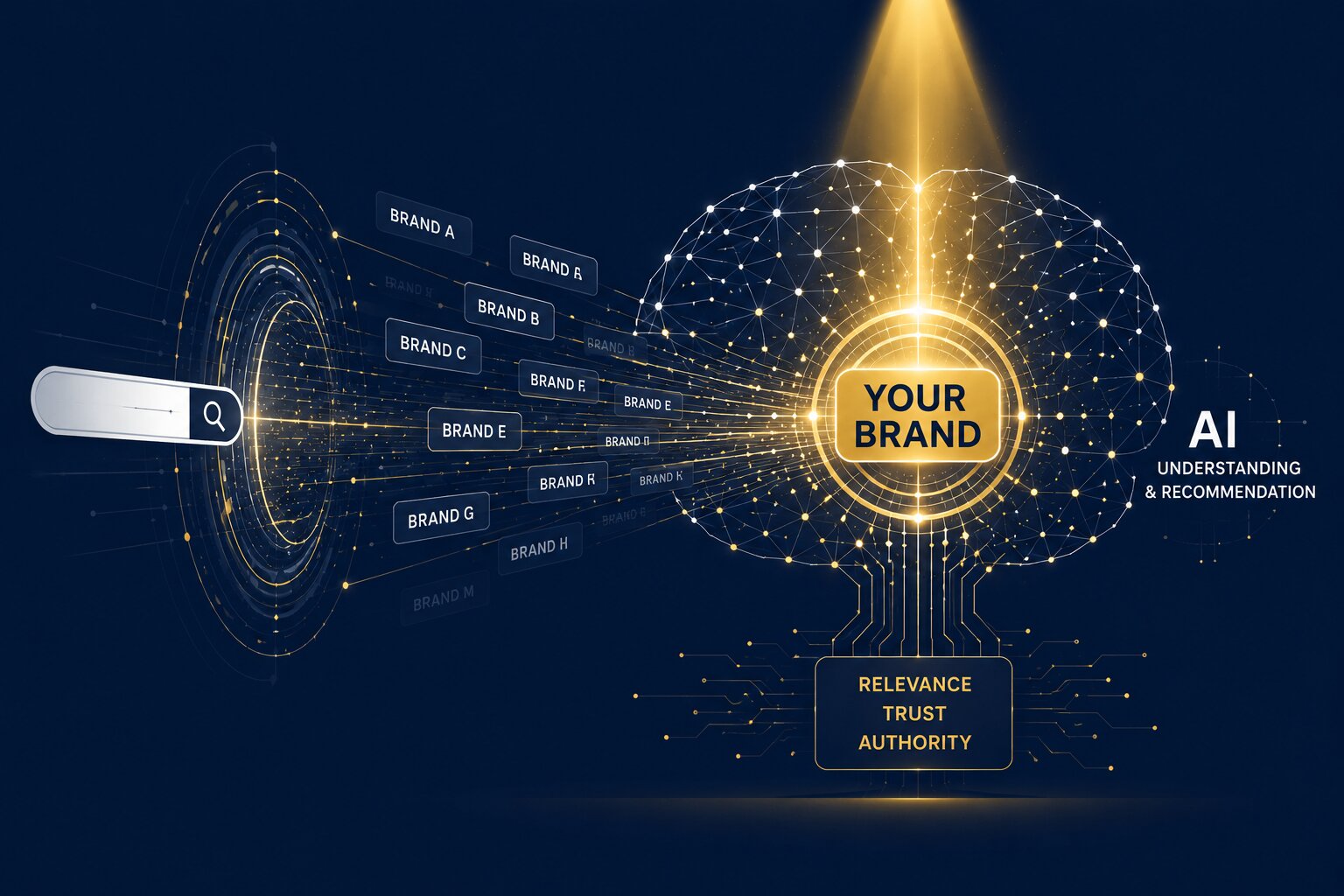
Generative Engine Optimization is the practice of designing content, structure, and authority signals so that AI systems can:
- Understand who you are (entity clarity)
- Trust your expertise (authority signals)
- Extract and summarize your content accurately (answerability)
- Cite or reference your brand in generated responses
In short, GEO optimizes for machine comprehension + human trust simultaneously.
As AI researcher Ethan Mollick notes:
“AI doesn’t just retrieve information—it decides what matters.”
That decision is now the most valuable real estate in digital marketing.
The Core Pillars of GEO in 2026
1. Entity-First Brand Architecture
Generative engines think in entities—people, organizations, concepts—not keywords.
Brands must clearly define:
- Who they are
- What they specialize in
- How they are different
- What topics they own
This requires consistent naming, structured pages, expert authorship, and topical depth across platforms.
2. Answer-Ready Content Design
AI systems favor content that can be cleanly summarized.
High-performing GEO content includes:
- Clear definitions
- Structured headings
- FAQ-style explanations
- Evidence blocks (data, studies, credentials)
- Explicit comparisons and conclusions
Content written to sound smart but not explain clearly will be skipped.
3. Proof-of-Expertise Signals
Generative engines prioritize credibility.
That means:
- Author credentials
- Citations to journals and trusted publications
- Case studies and outcomes
- Consistent viewpoints across platforms
According to research published on arXiv, AI-generated answers that include citations are significantly more trusted by users than those without references—highlighting the importance of verifiable sources in AI-mediated discovery.
4. Cross-Platform Authority Consistency
Generative engines ingest information from:
- Websites
- YouTube transcripts
- LinkedIn content
- Podcasts
- Knowledge graphs
- Community discussions
Your brand narrative must be consistent everywhere—or AI systems will struggle to confidently represent you.
Inconsistent signals reduce citation probability.
Why GEO Is a Power Skill, Not a Tactic
GEO is not:
- A plugin
- A checklist
- A keyword hack
It is a strategic capability that sits at the intersection of branding, SEO, content, UX, and AI literacy.
This is why Gartner predicts that by 2026, organizations that fail to adapt their digital strategies for AI-driven discovery will experience a measurable decline in brand visibility and inbound demand.
In practical terms, GEO rewards brands that think like:
- Researchers, not publishers
- Educators, not advertisers
- Authorities, not traffic chasers
From Ranking Pages to Shaping Answers
The most powerful shift introduced by Generative Engine Optimization is this:
Brands are no longer competing for clicks.
They are competing for explanation rights.
Who gets to explain the category?
Who defines the problem?
Who frames the solution?
In 2026, those brands will win—not because they shouted louder, but because AI systems trusted them more.
The Strategic Reality Ahead
SEO is evolving.
AI discoverability is accelerating.
GEO is the connective tissue between them.
Brands that begin building GEO capabilities today will compound authority over time. Those who wait will find themselves optimized for a system that no longer exists.
READ MORE:
Why 2026 Will Kill Traditional Digital Marketing (And What Will Replace It)

Written by
Dr. Deepika Bahri
Dr. Deepika Bahri is a passionate Branding and Digital Marketing expert with a Doctorate in Marketing, specializing in Brand Strategy and Digital Transformation. With over Two Decades of experience in the media, advertising, and communication industry, she brings a unique blend of academic insight and real-world business acumen. She has also been honored with an Honorary Doctorate for her contribution to Women Empowerment, recognizing her efforts in mentoring, uplifting, and creating platforms for women-led enterprises. Currently serving as the CEO of Antraajaal, a leading branding and advertising agency, Dr. Bahri is committed to sharing insights on branding, marketing strategy, women leadership, and digital growth through her writing and speaking engagements.
Need Expert Guidance?
Antraajaal builds purpose-led brand identities for serious businesses.
Brand strategy, identity and digital presence — one integrated system, built to lead across North India.
Our Services