 Dr. Deepika Bahri
The Quarantine period has affected most people’s life where they have learned something new right at home, which fortunately includes millennials gathering the basic life skills to carry out all the needful household chores all by themselves. Irrespective of the gender roles, everyone has acquired this skill set in their lives and rightfully said, household chores should be equally divided amongst family members.
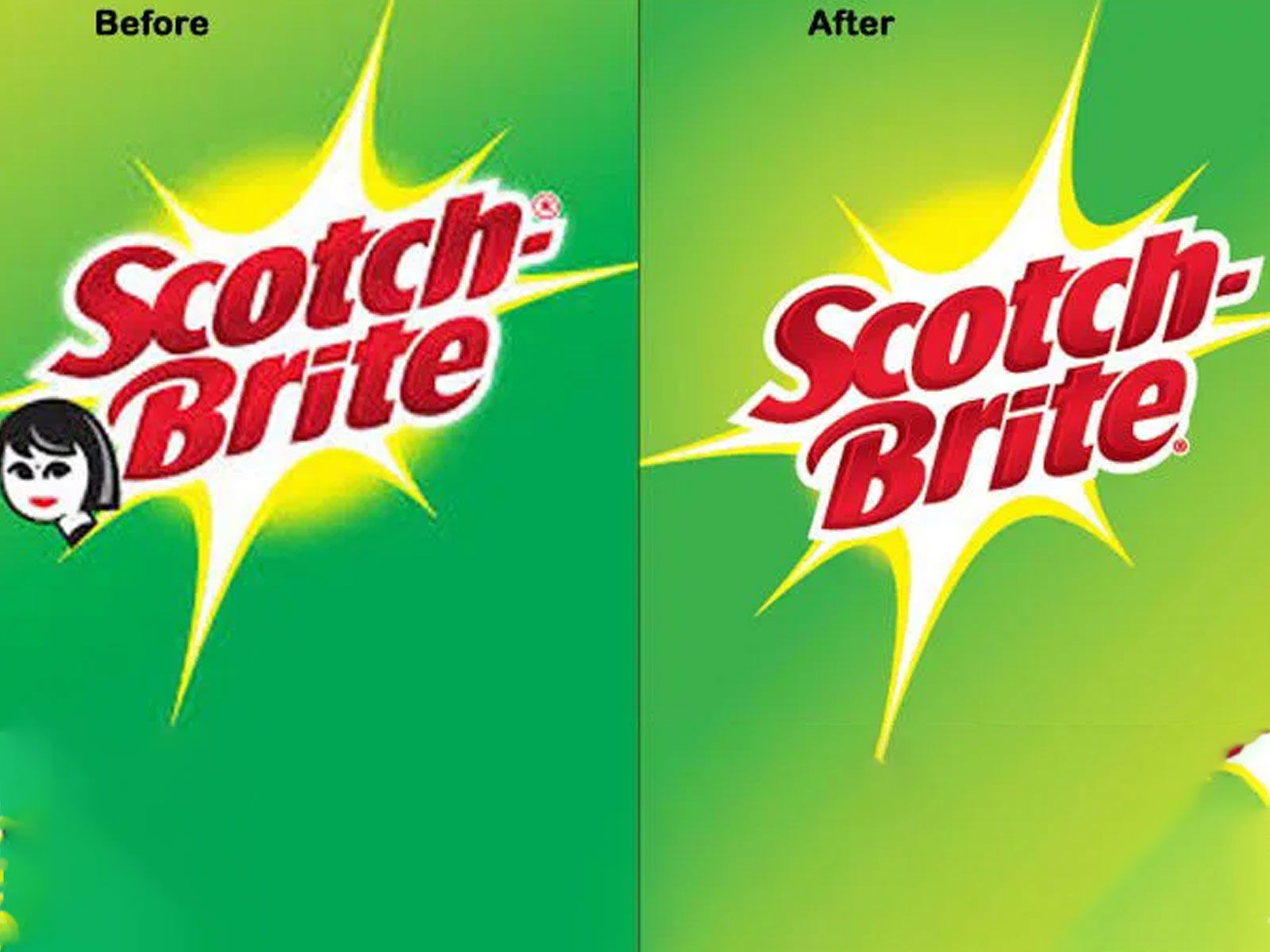
Lately, the story of a responsible social media user caught a buzz all over the internet when the Linkedin user named Karthik Srinivasan pointed out the “gender marker/stereotype” enforcement in Scotch Brite’s logo, which gathered a lot of attention on the online platform amongst the netizens.
The “Bindi Wearing Woman” on the product and the lint roller having a “Man’s Coat” were clear indications of the company’s logo depicting biased gender roles in society. The post also caught the parent company’s attention, who acknowledged the urge of a righteous consumer and mentioned their plans of changing their logo to normalize the gender roles and norms in the society.
This story is worth sharing over the online platforms as the two-way understanding between a responsible consumer and a company accepting and reforming its mistakes by having a clear discussion over a regressive logo is revolutionary.
Also See:
Why the Scotch Brite Logo Became a Turning Point
Logos are not just visual symbols; they are cultural cues. Every color, shape, and icon communicates something — sometimes subtly reinforcing beliefs, sometimes challenging them.
In Scotch Brite’s case, the “bindi-wearing woman” icon had existed for decades on packaging. While originally intended to represent a homemaker, the socio-cultural meaning attached to it evolved. Over time, it became a stereotypical shorthand for household work being “women’s responsibility”.
When the LinkedIn user pointed this out, he wasn’t just critiquing a design choice — he was calling attention to the way branding can unintentionally perpetuate outdated social norms.
Logos as Symbols of Social Conditioning
A logo travels everywhere — into homes, shopping carts, stores, and digital spaces. That’s why it becomes a powerful influencer of cultural behaviour.
In this case, the logo:
-
Equated domestic chores with women, reinforcing a single-gender association.
-
Positioned men as external to household responsibilities.
-
Mirrored old advertising tropes where cleaning/laundry products always depicted women.
This is why the criticism struck a chord: it wasn’t about Scotch Brite alone, but about the wider visual language of household brands in India.
The Power of One Netizen: Consumer Voice in the Age of Social Media
Traditionally, changing a logo took years of strategy meetings and research. Now, a single consumer insight — presented thoughtfully and logically — can trigger change.
What made this incident unique?
-
The user didn’t troll; he asked a valid question.
-
The argument was rooted in social representation, not outrage.
-
The post gained traction because it touched a real cultural nerve.
-
Scotch Brite’s parent company responded with maturity and openness.
This is an example of co-creation — where brands evolve with their audience, not in isolation.
Why the Company’s Response Matters
The parent company publicly acknowledging the issue shows:
-
Respect for feedback
-
Responsibility toward modern consumers
-
Awareness of cultural shifts
-
Commitment to progressive branding
By accepting the request and agreeing to change the logo, Scotch Brite demonstrated that design is not static; it grows with society.
It also reframed the brand as inclusive, responsive, and future-ready.
This move is being appreciated because it signals an end to gender-boxed branding, especially in domestic product categories.
Impact on the Branding Ecosystem
This one incident sets new expectations:
1. Brands must audit their logos for cultural relevance.
Visuals created decades ago might unintentionally communicate outdated stereotypes today.
2. Gender-neutral design is not a trend — it’s a necessity.
Especially for categories like cleaning, cooking, childcare, where stereotypes run deep.
3. The new era of branding is participatory.
Consumers expect brands to listen, adapt, and uphold values.
4. Progressive logos build trust.
When brands evolve visually, customers feel represented and respected.
A Case Study for Branding Agencies
For agencies, this incident becomes a classroom example of:
-
How logos should be reviewed through the lens of culture + inclusivity
-
The need to avoid gendered or regressive cues
-
The importance of visual storytelling with sensitivity
-
Building brand identities that withstand social evolution
-
Why every element of a logo (icons, characters, silhouettes) must be questioned
Brands that don’t evolve risk appearing tone-deaf or irrelevant.
Conclusion: A Small Logo, A Big Shift
The Scotch Brite incident shows that logos shape conversations. Even a small visual nuance can hold powerful meaning.
This change is not just a design revision — it is a cultural correction, a reminder that branding must be:
-
Inclusive
-
Neutral
-
Responsible
-
Representative of modern values
It highlights how a simple icon can spark national debate, shift brand behaviour, and inspire other companies to review their identities.

Written by
Dr. Deepika Bahri
Dr. Deepika Bahri is a passionate Branding and Digital Marketing expert with a Doctorate in Marketing, specializing in Brand Strategy and Digital Transformation. With over Two Decades of experience in the media, advertising, and communication industry, she brings a unique blend of academic insight and real-world business acumen. She has also been honored with an Honorary Doctorate for her contribution to Women Empowerment, recognizing her efforts in mentoring, uplifting, and creating platforms for women-led enterprises. Currently serving as the CEO of Antraajaal, a leading branding and advertising agency, Dr. Bahri is committed to sharing insights on branding, marketing strategy, women leadership, and digital growth through her writing and speaking engagements.
Need Expert Guidance?
Antraajaal builds purpose-led brand identities for serious businesses.
Brand strategy, identity and digital presence — one integrated system, built to lead across North India.
Our Services